Creamy Smiley: A Casual Script Font That Elevates Brands
I had a blank brand board open for a café visual refresh. The client wanted something friendly and warm, a touch of handmade charm without being messy. I cycled through a few typefaces, a clean sans for structure, a sturdy serif for body text, but the main logo concept felt flat. Then I dropped in Creamy Smiley. Instantly, the mood shifted. That single line of text—“Morning Blend Coffee”—had a pulse. It wasn’t just letters; it felt like a signature, a welcome. That’s the first thing you notice: Creamy Smiley has an inviting, casual confidence.
The Personality Behind the Letters
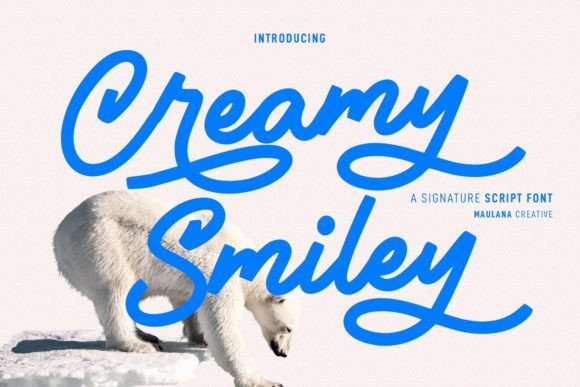
Creamy Smiley is, as the name suggests, a casual handwritten script font. Its strokes are soft and rounded, with a consistent flow that avoids the jagged unpredictability of some truly freehand scripts. This gives it a polished yet approachable feel. The personality is warm, friendly, and creative. It carries a mood of authenticity—think artisan bakery, independent skincare brand, creative studio, or boutique shop. It doesn’t shout; it smiles. That overall appeal lies in its versatility within that emotional space. It can suggest quality and care without appearing corporate or cold.
In the café project, I tested it across applications. On the logo draft, it stood alone beautifully, giving the business name a memorable, ownable shape. On a packaging mockup for a bag of beans, it looked excellent as the primary product name, supported by a simpler sans serif for details. On a business card, it worked as the headline, with enough character to be distinctive at a small size. In a website header, it created an immediate, engaging first impression. For social media layout graphics announcing a new blend, it was the perfect accent to pull focus.
Where Creamy Smiley Shines in Branding
This font excels as a display font. Its strength is in creating focal points.
- Logo Design: For brands built on personality, Creamy Smiley can be the entire logo or a key logotype component. It provides a unique, handwritten signature that’s hard to replicate.
- Packaging & Product Labels: On a jar, box, or bottle, it elevates the product name, suggesting craftsmanship and attention to detail.
- Social Media Graphics: It’s ideal for quotes, announcements, or headline text on posts, adding a human touch to digital content.
- Web Design: Perfect for hero section headers, key callouts, or navigation accents where you want to inject warmth.
- Business Cards & Print Collateral: As a name or title font, it makes personal connections feel more personal.
The font influences brand perception by adding a layer of authenticity and creative care. It aids recognition because its distinct style becomes a visual shorthand for the brand’s mood. For audience engagement, that friendly, non-corporate vibe can lower barriers and build rapport.
Practical Observations from Mockups
Testing in realistic scenarios reveals nuances. On a digital shop sign mockup, the font held up well at medium sizes, clear and legible. On a homepage hero section, it balanced perfectly against a photograph, not competing but complementing. On an Instagram post, even with platform compression, its character remained intact. On a printed card, the strokes looked crisp. The key is visual hierarchy: Creamy Smiley is your primary voice, your headline. You then need a clear, readable supporting typeface for all other information.
Understanding Its Limits for Professional Use
While incredibly versatile, Creamy Smiley is not for everything. It’s a display font, not a body text font. Using it for long paragraphs, dense website copy, or formal legal documents would be a severe mistake—readability plummets at small sizes and in extended use. Projects requiring absolute formal, corporate, or institutional gravitas (like a law firm, financial report, or technical manual) are not suitable. Its inherent casualness would clash.
It’s best used for short phrases, headlines, logos, and accents. Think of it as the brand’s expressive voice, not its explanatory voice. Before using it in final client work, always test it on your actual mockups. Print a sample at the size you intend to use. View it on different screen backgrounds. See how it interacts with your other brand elements.
Pairing Creamy Smiley with Other Fonts
A script font like this needs a strong supporting cast. For a balanced typography system, pair Creamy Smiley with a clean, neutral sans serif for all body text, captions, and functional information. A simple geometric sans works wonderfully. For a more classic or elegant contrast, a lightweight serif font can also pair well, provided the serif is unassuming and doesn’t fight for attention. Avoid pairing it with other overly decorative or handwritten fonts; that creates competition and visual noise. Let Creamy Smiley be the star, and give it a straightforward, readable partner.
A Note on Technical Details & Licensing
As a casual handwritten script font, its included features are crucial. Check for alternates, ligatures, and perhaps swashes to add variety to your headlines. Multilingual support is essential if your brand operates in multiple languages. Ensure you have the file formats you need for both print (like OTF) and web (like WOFF). Before any commercial use—client brand identity, packaging, merchandise, website, or digital products—always verify the font’s commercial licensing. Using it in a client’s permanent branding or on products for sale requires the proper license. This is a fundamental professional step.
In the end, Creamy Smiley proved its place in that café project. It wasn’t just a font choice; it was a personality choice. It translated a brand feeling into a visual form with ease and charm. For designers, entrepreneurs, and creators looking for that warm, authentic touch, it’s a tool that can genuinely elevate a wide pool of designs, from a local restaurant’s logo to a handmade shop’s social presence. Its strength isn’t in being loud or ornate, but in being consistently, reliably, and effectively friendly.