Barmukey: A Modern Script Font with Freestyle Charm
I had a blank brand board open on my screen and a mood board full of warm, handmade textures. The project was a visual refresh for a small café, moving from a slightly generic look to something that felt more artisan and personal. The owner wanted warmth, a touch of whimsy, but also a clear sense of craftsmanship. I clicked through my usual sans-serif options for the supporting text, but the logo and headline space felt empty. That’s when I dragged Barmukey into the document and typed the café’s name.
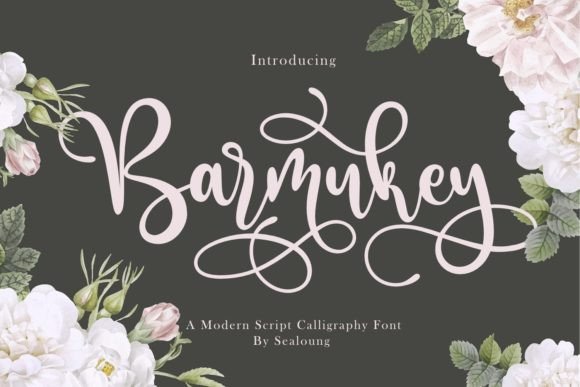
Immediately, the canvas changed. The font’s modern script calligraphy style, with its clear freestyle energy, filled the space with personality without overwhelming it. It wasn’t overly ornate or stiffly traditional; it felt contemporary yet crafted. That first test on a logo draft told me a lot. The letters flowed with a confident, natural rhythm, and the slightly uneven baseline gave it that human touch the project needed.
The Visual Character of Barmukey
Barmukey sits in a sweet spot for a script font. It has enough structure to be legible as a display font, but enough fluidity to avoid looking digital or rigid. The strokes have a pleasing variation in weight, suggesting a brush or broad-nib pen, and the open, airy letterforms prevent it from feeling cramped. Its overall mood is friendly, creative, and slightly casual—perfect for brands that want to communicate authenticity and a handmade ethos.
On the café’s business card mockup, the name rendered beautifully at a modest size. On a packaging label for their house-made granola, it added a premium, artisanal feel that a standard sans-serif could never achieve. The font’s personality is its greatest asset: it conveys effort and care. For a skincare product brand, a creative studio identity, or a boutique shop, Barmukey can instantly elevate the perception from mass-produced to thoughtfully crafted.
Performance in Real Branding Applications
Testing it across a full identity system revealed its strengths and informed its best uses. For logo design, Barmukey is a standout. It can work as a full wordmark or be paired with a simple icon. On the website header, it created an immediate and engaging visual hook. In social media graphics, especially for Instagram posts highlighting products or behind-the-scenes moments, it framed the content with a cohesive, branded style.
However, its role is primarily as a display font. I would not use Barmukey for long body text paragraphs on a website or in dense editorial design. Its charm lies in its distinctive shape, which is best preserved at larger sizes for headlines, short phrases, logos, and accents. On a shop sign or a homepage hero section, it’s impactful. On a printed flyer with lots of small informational text, it would hinder readability. This isn’t a limitation, but a clarification of its purpose: it’s a font for making key elements feel special.
Font pairing is crucial. Barmukey’s friendly script needs a clean, neutral counterpart to balance it and ensure the overall system remains readable and professional. I paired it with a simple, geometric sans-serif for all supporting text—menu items, body copy on the website, contact details on the business card. This combination worked perfectly: the sans-serif provided clarity and structure, while Barmukey provided the personality and visual anchor. It could also work well with a sturdy serif font for a more classic, editorial feel.
Practical Guidance for Using Barmukey
Before committing Barmukey to final client work, do a few real-world mockups. Place it on a dark background and a light background. See how it renders on a mobile screen and in a print proof. Check how it looks in a single color, as many budget-friendly print applications might not support complex gradients or effects. This font, given its freestyle nature, holds up well in solid black or white, which is a practical bonus.
Also, always check the commercial font license. If you’re using it for a client’s brand identity, packaging, or website, ensure your license covers that commercial use. This is a fundamental step for any professional project, ensuring you and your client are protected. Many modern fonts include webfont formats, so verify if Barmukey is available for web use if your project requires it for live site headers.
Projects That Suit Barmukey (And Those That Don’t)
Barmukey shines in projects where brand personality and a sense of crafted quality are paramount. Think:
- Food and beverage brands (bakery packaging, café logos, artisan product labels).
- Creative services (studio identities, freelance designer portfolios, workshop flyers).
- Handmade and craft businesses (online shop branding, Etsy store graphics, product tags).
- Personal projects and blogs where a friendly, approachable tone is key.
It would likely be a mismatch for highly formal corporate identities, legal documents, or any interface requiring extensive, small-size readability like a dense app or lengthy report. Its strength is in expression, not in anonymous utility.
My test with the café project concluded successfully. The brand board felt cohesive, warm, and unique. Barmukey provided the signature piece that made the system feel designed, not just assembled. For designers, creators, and business owners looking for a modern script font that avoids cliché and brings a genuine freestyle charm to logos, packaging, and key headlines, Barmukey is a compelling and practical tool. It fills a specific niche in the toolkit with confidence and style.